

Phoenix Landscaping Quotes What You Actually Pay For
Pinning down an accurate landscaping cost phoenix az requires looking past the final number. A yard remodel in the Valley prices out entirely based on access, materials, and demolition. Two identical designs can swing thousands of dollars based on how thick the base layer is, whether trenches are dug to code, and if materials arrive by machine or wheelbarrow. This guide breaks down what goes into a real estimate so you can spot the difference between a quality build and a rushed job.
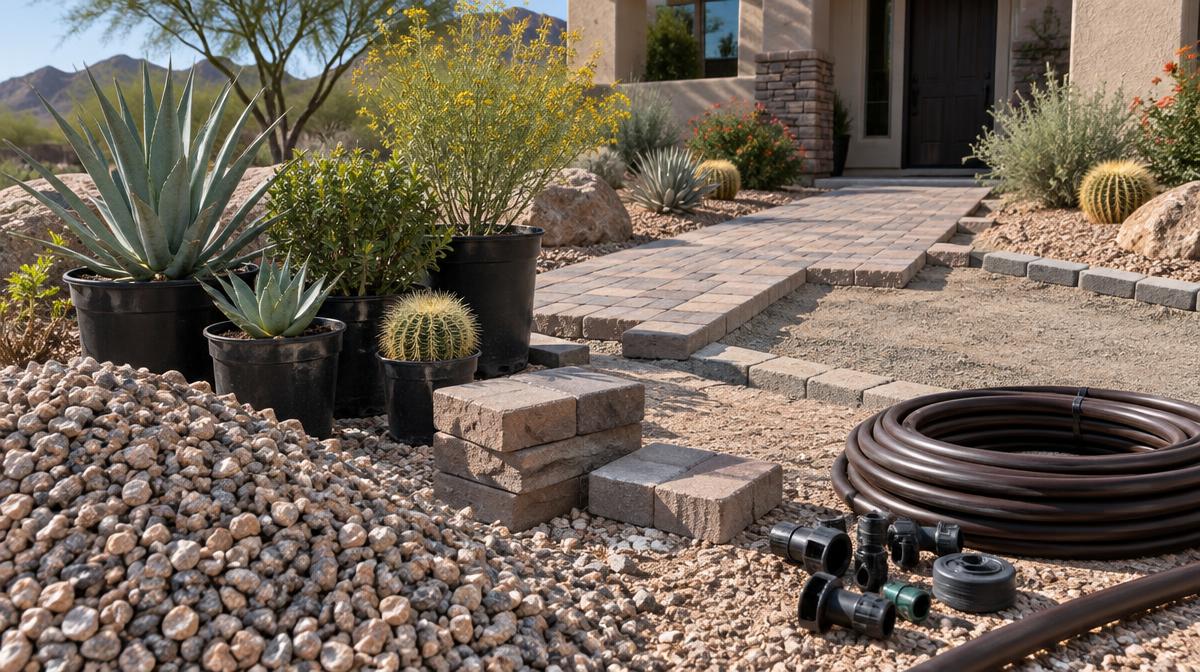
Homeowners frequently gather three bids and receive three wildly different totals. This happens because contractors assume different starting points. One estimator plans for a 4-inch compacted base and Schedule 40 PVC. Another plans for a 1-inch base and thin poly drip line. The designs look identical on paper, but the structures underneath do not compare. We price hundreds of yards across the Valley, and this breakdown shows you exactly what drives your total and how to compare phoenix landscaping estimates accurately.
The Four Pillars of Landscaping Cost Phoenix AZ
Every estimate is built on four core variables. Change any one of these, and the final price moves immediately.
Materials
This includes pavers, artificial turf, block walls, irrigation pipe, and decorative rock. The grade of material dictates the cost. Travertine costs more than concrete pavers. Premium artificial turf costs more than thin, low face weight rolls.
Labor and Time
Trenching, moving tons of rock, planting heavy trees, and cutting pavers takes significant man hours. Landscaping labor cost spikes if the soil is hard caliche or if hand digging is required near utility lines.
Machine Access
A standard 3-foot man gate means all material moves by wheelbarrow. An RV gate allows a skid steer to enter. Machine access cuts hauling time by days, dropping the overall labor expense.
Demolition
Starting with bare dirt is cheaper than tearing out old concrete, dead grass, or overgrown roots. Demolition includes dump fees, transportation, and heavy equipment operation.
Overhead and Permits
HOA approvals, city permits for gas and electrical lines, and project management add to the total. Licensed contractors carry insurance and bonding, which factors into the business overhead.
Never assume two contractors are quoting the same amount of materials. One might quote 10 tons of decorative granite at a 1-inch depth, while the other quotes 20 tons at a 2-inch depth. Always verify quantities.
What Drives Hardscape Pricing
Hardscape covers any non living elements in the yard. This is usually the largest single expense in a landscape installation cost breakdown.
Excavation Depth
A paver patio requires removing 4 to 6 inches of native soil to make room for the base layer. Digging deeper means more labor and higher dump fees, but skipping this step guarantees sinking pavers.
Base Material
We use Aggregate Base Course (ABC) under hardscapes. The cost changes based on how thick this layer is. A driveway needs a much thicker base than a walking path, requiring more material delivery and compaction time.
Material Grade
Standard concrete pavers are cost effective. Travertine, porcelain, and natural stone command higher material prices and require specialized cutting blades and highly skilled labor to install correctly.
Cuts and Curves
A square patio is fast to build. A patio with sweeping curves, fire pit cutouts, and border bands requires cutting hundreds of pavers by hand. Custom cuts dramatically increase labor hours.
Decorative Granite
Granite is sold by the ton. The price fluctuates based on the quarry, the color, and the size. Madison Gold and Desert Gold are local standards. Spreading rock correctly requires a 2-inch minimum depth for solid coverage.
- Tree Box Size
A 15-gallon tree is easily planted by one person. A 24-inch box tree requires a machine or four workers, driving up both the plant cost and the labor to set it. - Plant Gallons
Standard shrubs come in 1-gallon or 5-gallon pots. Filling a yard with 5-gallon plants provides instant gratification but multiplies the nursery bill. - Artificial Turf Quality
Turf ranges from thin, 40-ounce rolls to dense, 80-ounce premium products. The heavier the face weight, the more expensive the material. - Soil Amendments
Phoenix soil is deficient in nutrients. Digging holes twice as wide as the root ball and mixing in quality planting soil ensures survival, but adds material cost to the bid. - Warranty Replacements
Contractors who offer a robust plant replacement warranty factor that risk into their initial pricing. Cheap bids leave you paying for dead plants three months later.
The Hidden Costs of Caliche and Trenching
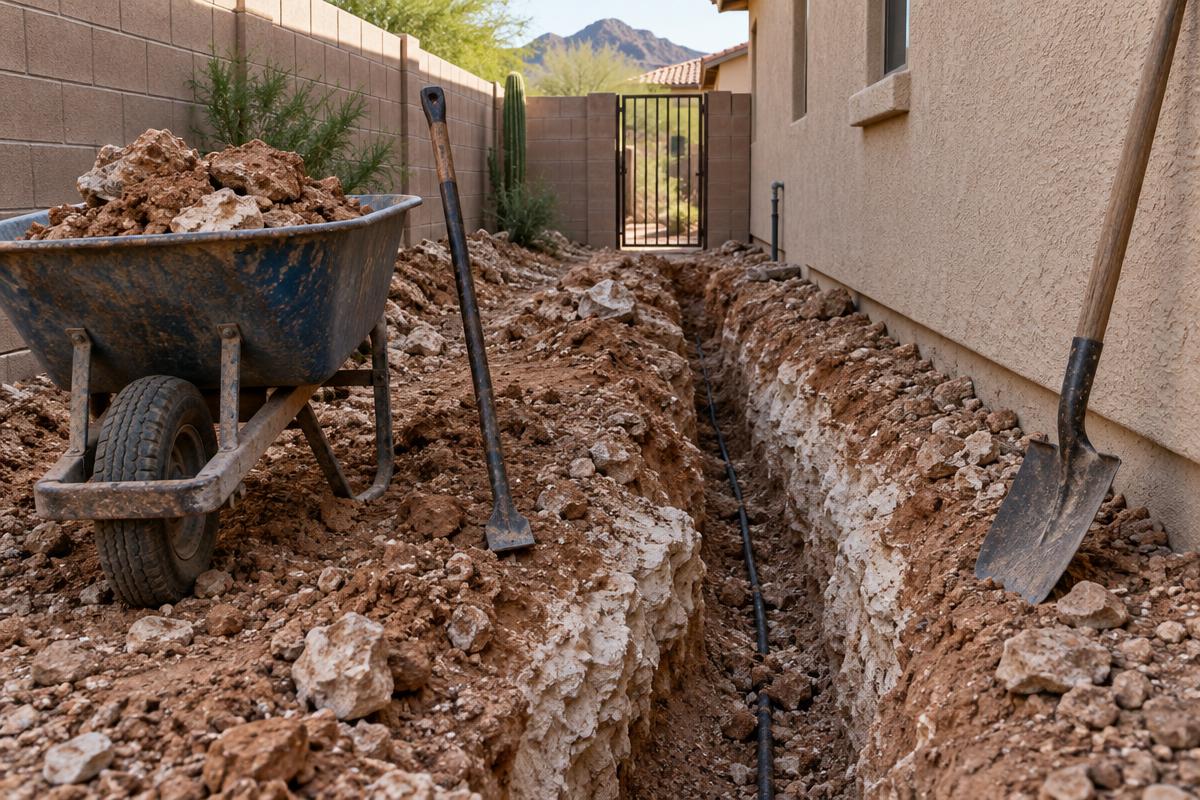
Phoenix soil is notorious for caliche, a concrete like layer of calcium carbonate sitting just below the dirt. You cannot dig through it with a standard shovel. When a crew hits caliche during an irrigation install or tree planting, they must bring in jackhammers and heavy machinery.
If your yard has extensive caliche, the landscaping labor cost increases simply because a task that takes one hour in soft soil takes five hours in hardpan. Quality contractors perform a site walk to assess soil conditions before providing a final number, preventing expensive surprises mid project.
Trenching depth is non negotiable. Irrigation lines must sit 12 to 18 inches below ground to escape the blistering summer heat. Contractors who bid exceptionally low often bury lines just 3 inches deep, leading to melted pipes and continuous leaks.
What Drives Landscaping Labor Cost
Materials account for roughly half of a landscaping quote. The rest is labor. Here is exactly what you are paying a crew to do.
Machine vs Hand Digging
Yards with wide access gates allow skid steers to move dirt fast. Tight side yards force crews to dig and move everything by wheelbarrow, multiplying the labor hours.
Old Yard Removal
Tearing out an old Bermuda lawn requires skimming the topsoil, bagging the roots, and hauling it to the dump. Demolition is heavy, time consuming work.
Trenching for Irrigation
Digging deep trenches for PVC pipes and low voltage lighting wire is physically demanding. Proper trenching protects the system but requires serious labor.
Soil Relocation
Excavating for a patio generates yards of excess dirt. That dirt either has to be spread and graded elsewhere on the property or loaded into a dump trailer and hauled away.
Base Preparation
Installing ABC base material means spreading it evenly, wetting it down, and running a heavy plate compactor over it multiple times to prevent future settling.
Material Moving
Moving 15 tons of decorative rock from the street into the backyard takes a coordinated crew hours of steady labor. The farther the walk, the longer it takes.
Detail Work
Cutting border pavers, hiding irrigation emitters under rock, adjusting sprinkler head angles, and seaming artificial turf require precision and patience.
Cleanup and Haul Off
A professional crew sweeps the street, washes down the driveway, clears all debris, and pays commercial dump fees to dispose of the waste.
How to Compare Phoenix Landscaping Estimates
| Line Item | Cheap Bid Assumption | Quality Bid Standard |
|---|---|---|
| Irrigation Pipe | Thin poly tubing laid shallow | Schedule 40 PVC trenched 12 to 18 inches deep |
| Paver Base | 1 inch of sand over dirt | 4 inches of compacted ABC base rock |
| Turf Infill | Standard sand or skipped entirely | Antimicrobial or cooling infill for heat and pets |
| Plant Sizing | All 1-gallon plants to keep costs down | A mix of 5-gallon shrubs and 15-gallon trees for instant impact |
| Granite Depth | 1 inch thick (dirt will show through soon) | 2 inches thick for total coverage and weed suppression |
Irrigation System Costs
Do Not Cut Corners on Water
Irrigation is the life support system for your yard. Replacing a cheap system costs twice as much as building a good one the first time. The desert destroys weak plastic fast.
A proper system runs hard pipe underground and only uses flexible tubing above ground to reach individual plants. Smart controllers that adjust based on local weather data cost more upfront but save hundreds on your water bill.
Doing It All vs Breaking It Up
If the total project exceeds your current budget, you have two choices: lower the material quality, or break the project into phases. We always recommend phasing. Lowering quality creates a yard you hate.
| Strategy | The Pros | The Cons |
|---|---|---|
| All at Once | Only one construction mess. Cheapest overall total since crews only mobilize once. | Requires the largest upfront budget. |
| Front Yard First | Satisfies HOA requirements immediately. Secures neighborhood curb appeal. | Backyard remains unusable dirt until phase two is funded. |
| Hardscape First | Gets the messy, heavy construction out of the way. Patios are instantly usable. | Yard looks unfinished until plants, turf, and rock are installed later. |
| Backyard First | Creates your private living space right away for family use. | May lead to HOA warning letters if the front yard is left bare. |
If you plan to phase a project, tell your contractor upfront. They will install sleeves under your phase one concrete so they can run irrigation pipes and lighting wire for phase two later without tearing up the new patio.
Specific Project Line Items
Quotes are built line by line. Here is how specific features impact your estimate.
Low Voltage Lighting
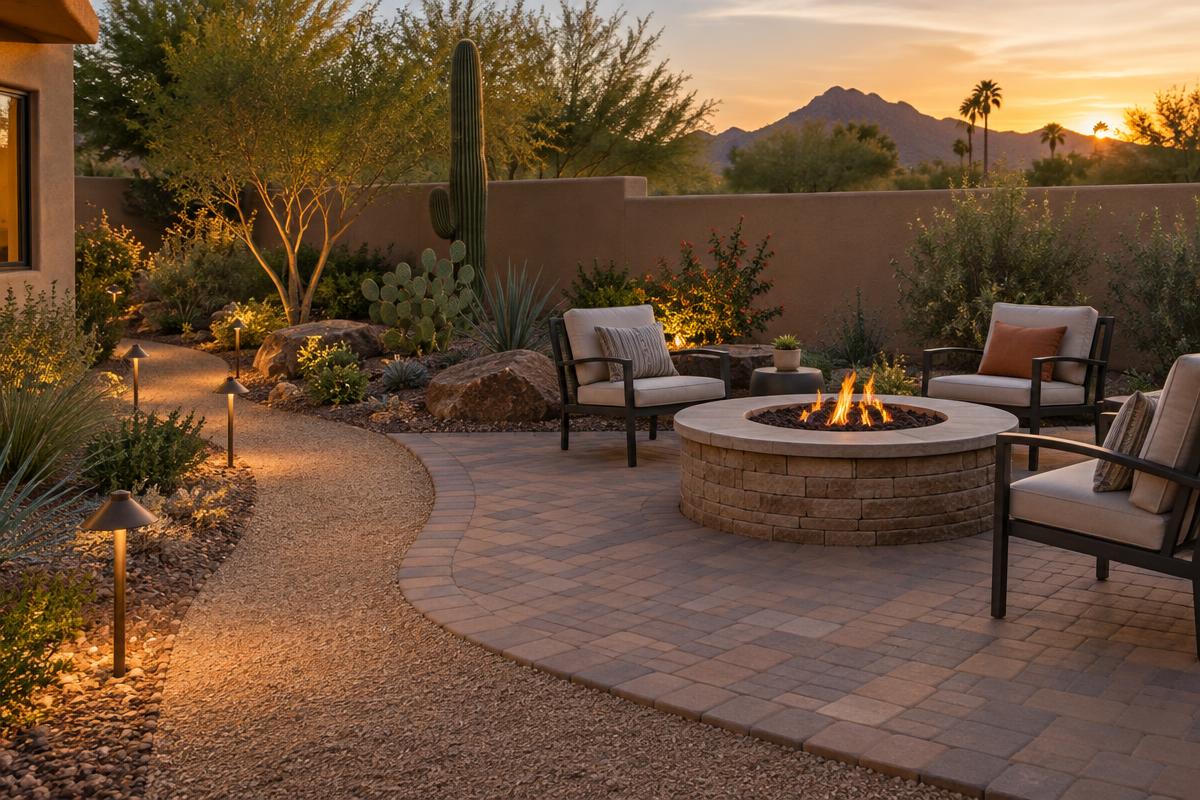
Trenching wire and setting brass fixtures adds cost, but makes the yard usable at night. Solar lights break in one summer.
Fire Pits
Wood burning is cheaper. Gas fire pits require trenching a dedicated gas line with city permits, raising the cost substantially.
BBQ Islands
Block construction, stucco finishing, granite countertops, and stainless inserts turn a grill into a major construction line item.
Concrete Curbing
Poured concrete borders hold rock back from turf perfectly. It costs more than plastic bender board but lasts decades longer.
Retaining Walls
Sloped yards need block walls to hold back soil. Walls require deep footings, rebar, and drainage, making them expensive to build correctly.
Drainage Systems
French drains and catch basins direct monsoon rain away from the house. Adding them costs money now but prevents foundation damage later.
Walkways
Connecting the front and back yard with stepping stones or paver paths adds square footage to your hardscape budget.
Weed Fabric
Commercial grade weed barrier under decorative rock prevents growth. Skipping it saves a few hundred dollars but guarantees a weekend weeding chore.
Red Flags in Cheap Estimates
When one quote comes in thousands of dollars below the others, they are not working for free. They are cutting corners.
- Lump sum pricing: A quote that just says "Backyard Remodel: $15,000" is dangerous. You have no idea how much rock, what size plants, or how deep the base is. Demand itemized lines.
- No haul off included: Leaving the demolition debris on the street or making you rent the dumpster shifts costs back to you.
- Verbal promises: If they promise a 24-inch box tree but the contract says "1 tree", you will receive a 5-gallon sapling. Get exact sizes in writing.
- Asking for 100% upfront: Standard payment terms include a deposit for materials, progress payments, and a final check upon completion. Never pay entirely in advance.
- Unlicensed contractors: The Arizona Registrar of Contractors requires licensing for landscape construction. Unlicensed work means no insurance, no bond, and no recourse if the job is abandoned.
Frequently Asked Questions
Select a question below to expand the answer.
How much does a backyard remodel cost in Phoenix?
It ranges widely based on materials. A simple yard with rock and plants might cost $8,000. A yard with pavers, artificial turf, an irrigation system, and lighting typically ranges from $15,000 to $35,000. Adding custom pergolas, fire pits, and outdoor kitchens pushes the cost higher.
Should I pay for landscaping upfront?
Never pay 100% upfront. The standard procedure is a percentage deposit to secure the schedule and buy materials, followed by progress payments at major milestones, with the final payment due only after a final walkthrough.
Are HOA approval fees included in landscaping quotes?
Usually no. The homeowner is typically responsible for paying HOA review fees. However, a quality landscape contractor provides the professional diagrams and plant lists you need to submit the application quickly.
Does poor machine access increase my quote?
Yes. If a skid steer cannot fit through your gate, every ton of dirt, rock, and base material must be moved by wheelbarrow. This adds days of intense manual labor, which directly increases the labor cost on your estimate.
Why are two quotes for the exact same design so different?
The difference is almost always found in construction standards. The cheaper quote likely assumes a thinner base under pavers, smaller plant sizes, thin irrigation tubing, and minimal decorative rock depth. Itemized quotes reveal these hidden differences.
Talk to a Landscaper Who Prices Transparently
Acevedo Desert Green Landscaping is a family owned landscaping company with over 20 years in Arizona and more than 3,120 completed projects. We install artificial turf, pavers, travertine, concrete, sod, and landscape lighting across the Phoenix area. We do not deal in hidden fees or vague lump sum contracts. We detail exactly what you are paying for, from the depth of the aggregate base to the gauge of the irrigation wire.
If you want a precise landscaping cost phoenix az for your property, we will walk the yard, check the access, test the soil, and provide a clear, itemized proposal. Browse our gallery to see our finished projects, then call (520) 631-0099 or reach us through our contact page to schedule a walkthrough.
Written by the team at Acevedo Desert Green Landscaping, family owned in Arizona for over 20 years and more than 3,120 completed projects across the state.


