
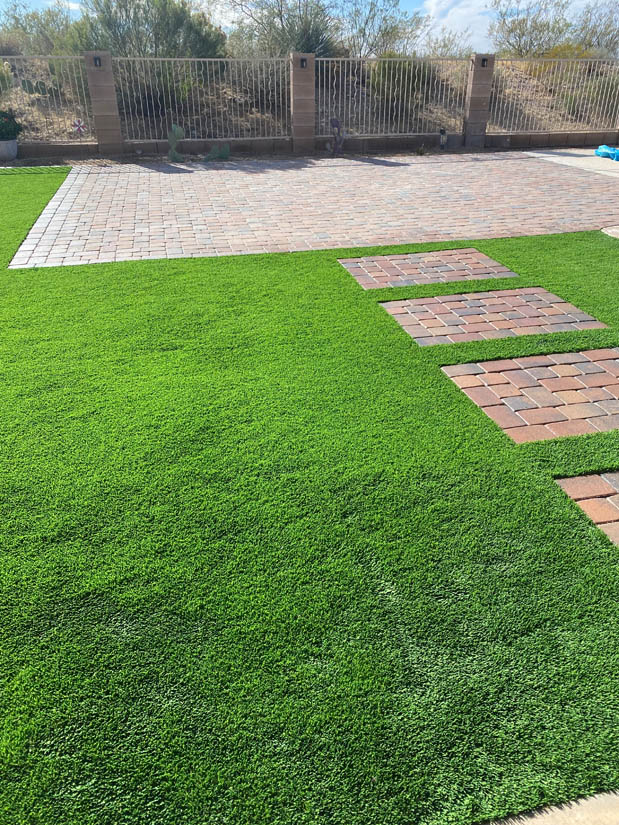
Backyard Putting Greens in Tucson How a Real Golf Green Is Built for Southern Arizona
A backyard putting green in Southern Arizona lives or dies on the base underneath it, not the turf on top. A true roll comes from excavation, aggregate lifts, compaction, grading, drainage, edge restraint, and the right putting surface working together.
October is when golf season really starts in Southern Arizona. The heat breaks, courses fill up, and tee times get harder to find. That is usually when homeowners in Tucson, Oro Valley, and Marana start asking what it would take to practice at home.
This guide explains how a golf-quality backyard putting green is designed and built for Southern Arizona soil, heat, caliche, and monsoon conditions. For the broader turf picture, our guide to what holds up in desert heat covers lawn turf, infill, and surface temperature.
What Matters Most Before You Build
- Putting turf is not lawn turf. It uses shorter pile, denser construction, and a firmer surface designed for predictable ball roll.
- The base sets the roll. Aggregate lifts, compaction, laser grading, and a smooth finish layer matter more than buying the most expensive turf.
- Green speed is adjustable. Turf specification, infill quantity, and brushing all affect stimp speed.
- Caliche and monsoon flow change the build. Southern Arizona soil and drainage have to be solved during excavation.
- Contours need a purpose. Breaks, tiers, and cup placement should create variety without making every putt funnel to the same low point.
- Fringe and transitions finish the yard. The edge against pavers, travertine, DG, or planting beds is what makes the green look custom.
- Maintenance is light, not zero. Brushing, rinsing, infill top off, and debris removal protect the roll.
Putting Green Turf Is Not Landscape Turf With a Shorter Haircut
Synthetic putting surfaces are engineered for one job: rolling a golf ball at a predictable speed and direction. Nearly every specification runs opposite to what makes a soft residential lawn feel comfortable.
Pile Height
Putting turf is very short so the ball rolls across the surface rather than through long fiber. Taller pile creates drag and makes speed less predictable.
Fiber Type and Stiffness
Putting products use stiffer texturized nylon or high-grade polyethylene fibers that recover after traffic and resist laying flat under shoes and repeated putting.
Stitch Rate and Face Weight
Dense construction spreads load across more fiber and reduces low spots where people stand repeatedly. Face weight shows how much material is actually in the surface.
Backing and Perforation
A stable backing helps resist heat-driven waves, while perforations move monsoon water through the surface instead of trapping it at seams or edges.
Infill
Fine rounded silica sand is brushed into the fiber to lock the surface flat and tune the speed. Infill volume is one of the main tools used to adjust how the green plays.
When an older green gets slow and grabby, the fiber is often not the problem. Sand may have migrated toward low areas and never been redistributed.
Green Speed Without the Jargon
Green speed is commonly measured with a stimpmeter, a ramp that releases a golf ball consistently so the roll distance can be compared. The USGA course care resources are a useful reference for understanding how course managers think about speed and consistency.
Turf Construction
Shorter, stiffer, denser fiber generally creates a faster and more consistent surface.
Infill Volume
More properly brushed sand generally firms and speeds the surface. Less sand leaves more fiber exposed and can slow the roll.
Brushing Direction
Regular brushing keeps the surface even. Neglected turf develops grain, which can influence roll independently of the contour.
The right question is not how fast the green can be made. It is how fast it should be for the size, slope, and way your family actually practices.
Size, Shape, Cups, and Contours
Design should begin with what you want to practice, not simply with how many square feet fit in the yard.
Shape
Free-form kidney and peanut shapes create multiple angles and usually blend into desert planting more naturally than a simple rectangle.
Cup Placement
Each cup should create a different approach, length, or break so the green does not feel like one repeated putt from several positions.
Breaks and Tiers
Subtle rolls, spines, false fronts, and gentle tiers keep the green interesting. Overdone contour on a small green can make every ball finish in the same low area.
Fringe and Approach
A taller fringe frames the putting surface and gives chips a realistic landing area. Chipping zones also need a base that can take repeated impact.
| Green Size | Realistic Cup Count | What It Supports | Typical Yard |
|---|---|---|---|
| Small | 1 to 2 | Putting practice, short breaking putts, family use | Courtyards and tight side yards |
| Medium | 2 to 4 | Varied putt lengths, light chipping with fringe | Most Tucson and Marana backyards |
| Large | 4 to 6 | Lag putting, multiple tiers, dedicated chipping approach | Larger Oro Valley, Catalina Foothills, and Green Valley lots |
Base Construction Is the Whole Job in Southern Arizona
Everything that makes a green roll true happens below the turf. This is also where Tucson-specific soil and drainage conditions matter most.
Excavation and Caliche
Putting greens need enough excavation depth for a shaped and compacted base. Caliche may need to be broken out or incorporated into the drainage plan rather than ignored.
Aggregate in Lifts
Base material is placed in layers. Each lift is spread, moisture conditioned, and compacted before the next one is added.
Laser Grading and Contours
Breaks are shaped into the base itself. Turf should follow the design rather than being stretched over arbitrary bumps.
Compaction and Smooth Coat
The final fine layer is screeded, compacted, and floated smooth. This is the surface the ball effectively reads through the turf.
Drainage for Monsoon Flow
Water must pass through the turf, through the base, and toward a planned outlet rather than into a low corner or back toward the house.
Cup Sleeves and Final Grade
Cup sleeves are set to final elevation and checked against the contours before the turf is installed.
Premium turf on a mediocre base will not outperform mid-grade turf on an excellent base. A golf ball finds dips your eye cannot see.
Fringe, Edging, and Transitions
The boundary is where a backyard green either feels integrated into the landscape or looks like a piece of turf dropped into the yard.
Fringe Turf
A slightly taller and often slightly different shade of turf frames the putting surface and provides a realistic chip landing area.
Concrete, Steel, or Pavers
A real restraint gives the turf something solid to anchor against instead of relying on a loose trench edge.
Pavers and Travertine
A curved paver patio border or travertine edge can secure the turf while keeping decomposed granite out of the fibers.
Level Transitions
Doorways, patios, and pool decks should meet the green without a raised trip edge or awkward slope change.
- Orientation and shade
Afternoon shade from the house, a ramada, or a mature tree changes how comfortable the green is during peak summer. - Infill choice
Lighter colored and coated sands absorb less heat than darker materials. - Rinsing
A short rinse cools the surface quickly and also clears Tucson dust from the fiber. - Time of day
Morning and evening are the practical playing windows through much of summer. - Lighting
Landscape lighting makes evening practice more useful when afternoon heat limits daytime use.
Putting Turf vs. Lawn Turf vs. Natural Grass
| Factor | Putting Green Turf | Landscape Turf | Natural Grass Green |
|---|---|---|---|
| Pile height | Very short, engineered for ball roll | Taller, engineered to look like lawn | Mown extremely low |
| Primary purpose | Consistent, true roll | Appearance and comfort underfoot | Playing surface with intensive maintenance |
| Water use | Rinsing only | Rinsing only | Heavy irrigation demand |
| Upkeep | Brushing, rolling, infill top off | Brushing and occasional rinse | Mowing, feeding, aeration, pest control |
| Desert suitability | Strong | Strong | Very difficult in Tucson |
| Comfort barefoot | Firm | Softer | Soft |
Many Southern Arizona yards use both synthetic surfaces: a putting green for practice and landscape turf for the lawn area used by kids and dogs.
What Drives the Cost of a Backyard Putting Green
Putting greens are priced from the site, not from a simple square-foot number. The base and site work drive much of the job.
Square Footage
More area means more excavation, base material, shaping, and turf.
Soil Conditions
Caliche, buried rock, old concrete, and difficult removal conditions increase labor.
Machine vs. Hand Work
A yard accessible to equipment is a different project from one where every load moves through a narrow side gate.
Contour Complexity
Tiers, spines, false fronts, and more complex breaks require more grading and checking.
Cups and Chipping Areas
More cups, fringe, and impact zones add base and installation detail.
Monsoon Planning
Slopes, low spots, and site flow may require drains, basins, or dry wells.
Edge Treatment
Concrete, steel, and paver borders each carry different material and labor requirements.
Add Ons
Landscape lighting, bunkers, surrounding hardscape, and planting all change the final project.
Turf Grade
Fiber type, density, backing, and warranty tier affect product cost.
A small green on a sloped, hard-to-access lot can involve more work than a larger green on a flat open yard. Square footage alone does not tell you the real job.
How Backyard Putting Greens Fail
| What You See | Likely Cause |
|---|---|
| Waves and inconsistent roll | Under-compacted or unevenly screeded base settling under foot traffic |
| Visible seam bumps | Poor seam cutting, joining, or seam placement across important putting lines |
| Infill migration | Sand moving downhill into low spots after heavy rain or repeated play |
| Edges lifting | Thermal expansion combined with weak edge restraint |
| Standing water and silt | No drainage plan or a low corner that traps monsoon runoff |
| Grain and matting | Surface not brushed, allowing traffic direction to influence roll |
Maintenance and Lifespan
- Brush the surface regularly with a stiff bristle broom and alternate direction so the fiber stands evenly.
- Rinse periodically to remove Tucson dust and cool the surface.
- Check and top off infill seasonally, especially after major storms.
- Keep palo verde, mesquite, and other organic debris off the surface.
- Inspect edges once a year for lifting or gapping.
- Plug unused cups so debris does not collect inside the sleeve.
A properly built base is effectively permanent. The turf is the replaceable wear layer on top of it.
Pairing a Green With the Rest of the Backyard
Pavers and Travertine
Frame the green, hold the edge, and share one grading and drainage plan.
Landscape Lighting
Turns a summer green into something usable after sunset.
Landscape Turf
Use a separate lawn product where kids and dogs need softness rather than ball roll.
Planting and Boulders
Softens the edge so the green reads as part of the landscape instead of an insert.
Drainage Improvements
Plan drainage for the entire yard at once rather than repairing each zone separately after storms.
Frequently Asked Questions
Select a question below to expand the answer.
How do you make a putting green in your backyard?
Lay out the green and cup positions, excavate to depth, address caliche, build and compact the base in lifts, grade the contours, screed a smooth finish layer, set the cup sleeves, install the putting turf and fringe, brush in silica sand infill, and finish the perimeter into a solid edge restraint.
How much space do I need for a backyard putting green?
Less than many homeowners expect. A courtyard-sized green with one or two cups and a few genuine breaks can still provide meaningful practice. More space matters when you want long lag putts or a real chipping approach.
How fast will my green be?
Speed is part of the specification. Turf construction, infill amount, brushing, and contour all influence pace. Tell your installer whether you want tournament-like speed or something more forgiving before the product is ordered.
Does a synthetic putting green drain during monsoon season?
Yes, when the base and outlet are designed correctly. Water passes through the turf perforations into the base and then toward a planned drainage path.
Do backyard putting greens get hot in Tucson?
Yes. Synthetic surfaces heat up in direct sun. Shade, lighter infill, rinsing, and using the green in the morning or evening all improve comfort.
Can I chip onto a synthetic green?
Yes, if the green is designed for it. A fringe or approach area and a base built to handle repeated impact are important.
How long does an artificial putting green last?
The base can last for many years when it is built correctly. Turf lifespan depends on fiber grade, UV exposure, traffic, and maintenance. Replacing turf over a sound base is far simpler than rebuilding the entire green.
Can a putting green be added to an existing patio or pool deck?
Usually yes. The critical details are grade transition, drainage, and giving the turf a solid edge restraint at the hardscape.
Do I need to water or mow it?
No mowing or irrigation is required. Maintenance is mainly brushing, rinsing, debris removal, and periodic infill top off.
Do you build putting greens outside the city of Tucson?
Yes. Acevedo Desert Green Landscaping installs putting greens across Tucson, Oro Valley, Marana, Sahuarita, Green Valley, Vail, and Catalina.
Talk to a Southern Arizona Putting Green Builder
Acevedo Desert Green Landscaping is a family-owned outdoor living and hardscape company with more than 20 years in Southern Arizona and over 3,120 completed projects. We design and build custom backyard greens along with turf, pavers and patios, travertine, concrete, and landscape lighting, which means the green, the surrounding hardscape, and the drainage can all be planned as one project.
See completed work in our gallery, learn more about backyard putting green installation, or tell us about your yard through our contact page.
Written by the team at Acevedo Desert Green Landscaping, family owned in Tucson for over 20 years and more than 3,120 completed projects across Southern Arizona.


